Little Children: By Your Side

Modern pop, but with a breakdown that somehow manages to echo Buffalo Springfield. Perhaps the band’s promo blurb says it best:

Little Children’s auditory sustenance fully personifies the essence of modern pop music’s history. No genre goes unexplored or escapes its distinctive formation!  Essentially, Little Children has established an original and sensational standard within music’s modern empire.

Standing tall next to the striking melodies and poetic worlds built by Little Children’s fate-driven lyrics shines the involvement of multi-instrumentalist Andreas Söderström. Söderström’s indispensable contribution to the album’s diversity allows Little Children’s vocals to reach depths from both ends of a spectrum resulting in an obliging mélange that ranges from the darkest of tones to a weightless dictum, moving with an unreserved synchronization.

“Walk Within” contains all of the delicate ingredients that characterize an upcoming milestone: sincerity, clarity and energy, all the while retaining the essential passion that tugs at your heartstrings and reaches deep into your bones.

Ultimately “Walk Within” reminds us that it is indeed 2014 and the auditory continuation of music by its example is invigorating, striking and irrefutable.

Then again, maybe it’s better to just listen to their fantastic new single.

Little Children’s Home Page

Art Decade: Art Decade

ArtDecade_ArtDecade

This Boston quartet, led by singer-songwriter and orchestrator Ben Talmi, has been seeded with the orchestral rock DNA of ELO, and grown under the golden hooks and harmonies of 1960s sunshine pop. But these sonic nods to earlier times aren’t mere nostalgia, as they’re updated with modern-pop melodies that suggest Blind Pilot, Keane and others, and complex arrangements that drink from the same production fountain as Sufjan Stevens and the Explorer’s Club. The lead off, “No One’s Waiting,” is a masterpiece whose brooding introduction feints in the same direction as Eric Carmen’s “Sunrise” before kicking into gear with swirling strings and a soaring vocal that hangs the title on a perfect melodic hook. Talmi’s layered vocals interlace with violins and cellos as the four-piece rocks the song to a thrilling conclusion.

It’s one thing to have a talented and sympathetic orchestrator decorate your songs, but quite another to have the orchestration composed in the songwriter’s head. Think Brian Wilson rather than George Martin. Talmi’s songs are built from words, rhymes, melodies, meters and vocals, but it’s the way they interplay with the rock instruments, and the rock instruments interplay with the strings and brass that gives these songs both their delicacy and power. Art Decade is a top notch modern-rock band on their own, but when supplemented by the orchestral elements, they gain a thrilling extra dimension. The songs draw impressions with poetic imagery and vocal tone, and highlight emotional moments with the arrangements.

Talmi’s songwriting encompasses the winsome side of the three B’s (Beatles, Big Star and Badfinger), the darkness of Paul Simon and Nick Drake, but most often the melancholy of Brian Wilson. “So I Thought” combines a bouncy McCartney-styled chorus with a lyric that leans to the uncomfortable self-discovery of Pet Sounds, and in “Idle Talks,” Talmi declares “I’m stuck here swimming with words that drown me out from the truth.” There are moments of light, including the emotional support of “No One’s Waiting” and attraction of “Walking Together,” but more often inability turns to indecision and ambivalence as Talmi vacillates between reducing and increasing distance. If you ever wondered what Elliot Smith would sound like as produced by Jeff Lynne, Art Decade’s second full-length album will give you a hint. [©2014 Hyperbolium]

Art Decade’s Facebook Page

Birth of the Living Dead

DVD_BirthOfTheLivingDeadThe tumultuous late-60s birth of the living dead

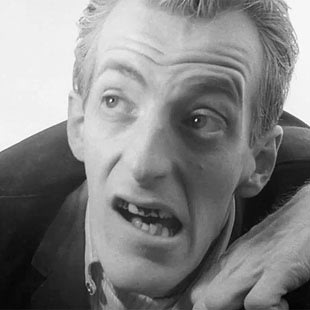
George Romero’s Night of the Living Dead is one of the most influential, independently-produced films of all time. Not only did it create a new horror genre that’s lurched resolutely forward for more than fifty years, its transformation of low-budget constraints into story-telling assets is a template that’s been reused throughout the world of filmmaking. Romero’s semi-professional and amateur cast and crew, improvised effects and black & white film stock all contributed to an unrehearsed, reportorial feel that gave the film’s overt horror an even deeper psychological edge. And if that was all there was to the film, it would still stand tall in the horror canon; but there was much more to be found beneath the shockingly gory surface.

Night of the Living Dead was both a product and reflection of its times: the social upheavals amid which it was made, the city that rallied behind its hometown production, and the world into which the film was released. First Run Features’ 78-minute documentary explores the film’s production and the commercial and social milieus in which it was created. Threaded throughout are clips from a 2006 interview with Romero and commentary from a number of filmmakers and critics. An additional 33-minutes of interview footage is included as a bonus feature, augmented by an extraordinary 10-minute audience Q&A from a 1970 showing of the film at the New York Museum of Modern Art. The bonuses are rounded out with a short report on a world-record-breaking zombie walk at the same Monroeville mall at which Romero made Dawn of the Dead. The latter includes a short conversation with Zombie #1, Bill Hinzman.

The documentary starts with Romero’s early career producing shorts for television’s Mr. Rogers (sadly, “Mr. Rogers Gets a Tonsilectomy,” is not excerpted), and ads for beer and soap. His production company, The Latent Image, built their way up to the 35mm equipment that was used to make NOTLD, his first full-length film. Romero initially tried to peddle a script for a Bergmanesque art film, but failing to find investors he turned to the more commercial genre of horror. Inspired equally by Richard Matheson’s I Am Legend (which had been turned into the 1964 film The Last Man on Earth) and the angry discontent brewing at home and in Vietnam, the 27-year-old Romero and his partner John Russo crafted a bleak picture of a country literally devouring itself in gustatory revolution.

Amid the inspirations of the times, one might think Duane Jones’ casting as the film’s lead (and the story’s most capable and steady character) was some sort of counterculture reaction to or comment on the racial tensions of the times. But it turns out that Jones was selected solely for his classically-trained acting skill, and featured as a character whose race was never an element of the plot. Though his placement was quite revolutionary, the script was written before his casting, and the lack off issue with his skin color turned out to be a lens through which the film was viewed, rather than a purposeful statement by the filmmakers. As in several other respects, the film gained context from its era without necessarily drawing from it directly.

Filming in and around Pittsburgh, Romero assembled a cadre of semi-professional and amateur actors and technicians. A new production company, Image 10, was formed to finance the film, and several of the investors (and Latent Image’s advertising clients) appeared in the film or served in technical roles. Romero drew upon the Pittsburgh community for help, pulling in local acting talent, police (and their dogs) and even a news station’s helicopter. Bill “Chilly Billy” Cardille, the host of Chiller Theater appeared as a newsman in the film, and one of the film’s investors, who had a day job as a meatpacker, provided the animal parts used in the gore sequences. The documentary reveals that many of the actors played multiple roles and served in technical capacities; Marilyn Eastman, for example, played the mother Helen Cooper, a bug-eating ghoul, and served as the film’s make-up artist.

An hour into the documentary, the analysis turns to the film’s release and public reception. Wrapping in late 1967, it wasn’t until Spring 1968 that Romero went shopping for distributors. Carrying “an angry 60s film with a black lead,” shot by an unknown, Pittsburgh-based production company, in black and white, on a budget of only $100,000, in a film genre whose box office had been slipping, Romero had no luck with Columbia, AIP or other major distributors. The film was eventually picked up by the Walter Reade Organization (who re-titled the film from “Night of the Flesh Eaters” and inadvertently lost its copyright) and released to theaters, drive-ins and grindhouses. Critics, including Vincent Canby and Roger Ebert, failed to understand the film and trashed it in their reviews. Still, the film did well enough to be selected “Exploitation Picture of the Month” by the National Association of Theater Owners.

The film got a more public boost when a 1969 re-release resulted in an interview with George Romero in Andy Warhol’s Inter/view, and praise in France’s Positif. The film was shown at New York’s Museum of Modern Art in June 1970, and a 10 minute audio Q&A with the audience finds Romero giddy with the acceptance his film had finally found. Romero is a lively and interesting interview subject, and though the additional commentary from assorted filmmakers, screenwriters and critics is interesting, it would have been even more interesting to hear from other surviving members of the film’s cast and crew. The film’s Pittsburgh birth and improbably huge (and long-lasting) impact are great stories, but grounding NOTLD’s ethos in the anger, radical politics and violence of the late ’60s is this documentary’s most surprising revelation. [©2014 Hyperbolium]

Birth of the Living Dead’s Home Page

Otis Redding: These Arms of Mine

Nicolas Beauchemin’s contest-winning video ensures you’ll never again cross the threshold of an elevator without looking down to check. Keep a sharp eye at 1:57.

Still, it’s hard to top hearing Otis Redding in Johnny Castle’s cabin, and the segue to Solomon Burke doesn’t hurt.

Then again, maybe Otis Redding is better heard in Dalton’s loft.

Galactic (Featuring JJ Grey): Higher and Higher

A hot piece of neo-funk from the New Orleans-based Galactic, with JJ Grey on vocals. Catch them on tour – see below.

Galactic’s Home Page

On Tour

Feb 14 – Port Chester, NY – Capitol Theatre ^
Feb 15 – New York, NY – TERMINAL 5 ^
Feb 28 – Mobile, AL – Soul Kitchen *
Mar 01 – New Orleans, LA – Tipitina’s
Mar 03 – New Orleans, LA – Tipitina’s
Mar 06 – St. Louis, MO – The Pageant “
Mar 08 – Denver, CO – The Fillmore + %
Mar 09 – Aspen, CO – Belly Up %
Mar 10 – Salt Lake City, UT – The Depot %
Mar 11 – Victor, ID – Knotty Pine
Mar 13 – Seattle, WA – Showbox %
Mar 14 – Portland, OR – Crystal Ballroom %
Mar 15 – Petaluma, CA – Mystic Theatre %
Mar 16 – Crystal Bay, NV – Crystal Bay Club %
Mar 18 – Sacramento, CA – Harlow’s
Mar 19 – Solana Beach, CA – Belly Up %
Mar 20 – Los Angeles, CA – El Rey %
Mar 21-22 – San Francisco, CA – The Fillmore %
Mar 26-29 – Las Vegas, NV – Brooklyn Bowl
Apr 02-05 – Las Vegas, NV – Brooklyn Bowl
Apr 09-12 – Las Vegas, NV – Brooklyn Bowl
Apr 25 – New Orleans, LA – Tipitina’s
Apr 27 – New Orleans, LA – Jazz Fest
May 02 – New Orleans, LA – Tipitina’s
May 03 – New Orleans, LA – Sugar Mill @
May 24 – Thornville, OH – Dark Star Jubilee
May 31 – Blackstock, SC – Blackstock Music Festival
Sep 11 – Danville, IL – Phases of the Moon Music & Art Festival

(^) w/ JJ Grey & Mofro
(*) w/ Naughty Professor
(“) w/ The Mike Dillon Band
(+) w/ Robert Randolph & the Family Band
(%) w/ Brushy One String
(@) w/ Thievery Corporation and Rising Appalachia

The Dream Syndicate: The Day Before Wine and Roses

DreamSyndicate_TheDayBeforeWineAndRosesThe Dream Syndicate live in their early prime

Performed a week before laying down The Days of Wine and Roses, this September 1982 live set provides a career bookend to the Dream Syndicate’s 1989 set Live at Raji’s (and later expanded as The Complete Live at Raji’s). Recorded at Los Angeles radio station KPFK’s Studio Zzzz, the 2am start gave the paisley underground’s leading lights (including Green on Red, the Rain Parade and Bangles) an opportunity to attend, and all were treated to a band whose nine-month public career had quickly brought them to both artistic and critical prominence. The set list included all four titles from their debut EP, the title song of The Days of Wine and Roses, an early sketch of 1984’s “John Coltrane Stereo Blues” (under the title “Open Hour”), and covers of Buffalo Springfield, Bob Dylan and Donovan.

The band eases into the set with a sedate version of “Some Kinda Itch,” transforming the original’s frenetic energy into a relaxed Doors/Velvets-styled late-night jam. The set adds low-stringed weight with the band’s take on “Mr. Soul,” and really starts to gain momentum with “Sure Thing.” What listeners will quickly realize – and what the in-studio audience must have felt – is that this isn’t a simple recitation of the band’s catalog, but a carefully crafted live set. The playlist builds tension by allowing the tempo, volume and instrumental ferocity to surge and ebb, skillfully winding its way to the climactic debut of “The Days of Wine and Roses.” Throughout the evening (well, morning) Steve Wynn charms the audience with humor and an easy manner that belies his relatively few years in front of audiences.

The band gets stronger as the set progresses, and they rip into Dylan’s Bringing it All Back Home-era “Outlaw Blues” with Karl Precoda stressing his guitar in ways the folks at Newport could scarcely have imagined. That turns out to be only a warm-up, as “Open Hour” (in one of its first run-throughs) is stretched into an instrumental jam that showcases Precoda’s feedback-laced guitar work. “When You Smile” turns its melody into an atmospheric howl that underlines the song’s quiet introduction and portends the aural storm on the horizon. The set wraps with a primal eight-minute cover of “Season of the Witch,” and closes at 3am with Precoda’s guitar in full pyrotechnic glory for “The Days of Wine and Roses.”

More than thirty years later, the performances retain their power, and with added distance, the band sounds more apiece with their influences than derivative of them. Three of these tracks (“Some Kinda Itch,” “Sure Thing” and “Mr. Soul”) were previously released in 1983 as the B-side of a Rough Trade 12″, and the full show in 1995. But with both discs out of print, Omnivore’s reissue will be welcomed by long-time fans (including, it turns out, Steven Wynn himself), and a revelation to the uninitiated. Pat Thomas’ liners from the 1995 release are augmented by Steve Wynn’s memories of the songs, performances and people, fleshing out the story of how the Dream Syndicate’s passion was showcased live. [©2014 Hyperbolium]

The Dream Syndicate’s Home Page

The Rolling Stones: Charlie is My Darling

RollingStones_CharlieIsMyDarlingThe Rolling Stones at their 1965 peak

Filmed on a two day Rolling Stones tour of Ireland in September 1965, Peter Whitehead’s fifty-minute documentary garnered only limited showings before being shelved. In 2012, ABKCO returned to the source material to restore and expand the film to sixty-five minutes, releasing it as a single DVD and a five-disc box set that included the DVD, a Blu-ray, an LP and two CDs.  The second of those CDs featured thirteen live tracks from the tour’s concerts, recorded at the peak of the Stones first incarnation. Those tracks are now being released as digital downloads, augmenting the meager selection of commercially released early live performances, such as 1964’s T.A.M.I. Show and 1965’s UK EP Got Live if You Want It.

Included among the tracks are many icons of the Stones early live set, including covers of Solomon Burke’s “Everybody Needs Somebody to Love,” Bo Diddley’s rave-up “I’m Alright,” Hank Snow’s “I’m Moving On,” Willie Dixon’s “Little Red Rooster,” Allen Toussaint’s “Pain in My Heart,” Bobby Troup’s “Route 66,” Jerry Ragovoy’s “Time is on My Side,” and two Jagger/Richards’ originals, “Off the Hook” and “The Last Time.” The latter was the Stones’ first hit single of 1965, but by the time of their Irish tour, “(I Can’t Get No) Satisfaction” (which is included on the box set’s first CD) had already topped the U.S. chart and was just about to peak in the UK.

The mono recordings are surprisingly listenable, given the state of mobile recording in 1965. These tracks don’t have the presence or instrumental separation of live albums made a decade later, but Jagger’s vocals are seated nicely into the mix, and the guitars, bass and drums are all legible. Better yet, the screaming crowd adds electricity without often overwhelming the music. The only thing that would be better is for the live tracks from the box set’s first CD to have been added here; at only 28 minutes (and as a digital collection with no physical length limitation), there’s plenty of room. Stones fans will want to see the documentary, but will also need the audio tracks for more regular rocking. [©2014 Hyperbolium]

The Rolling Stones’ Home Page
ABKCO’s home page

Leo Welch: Sabougla Voices

LeoWelch_SabouglaVoicesPrimal Southern gospel-blues

It turns out that there are still howling, primal blues talents left to be discovered, and Mississippi native Leo Welch is one. After cold-calling Fat Possum’s Big Legal Mess label, he auditioned over the phone and reawakened the label’s interest in releasing blues records. Welch played guitar, harmonica and fiddle from a young age, but his opportunities to build a career in music were sacrificed to more mundane work. Now, at age 81, he’s brought together his church-bred gospel foundation with a love for the blues and produced music that recalls the electrifying call-and-response of preacher chants. Welch provides the rhythmic oratory, the guitar adds a soloist’s sting, and the piano, percussion and occasional backing singers provide the chorus. The spirit is lively and the testimony strong. [©2014 Hyperbolium]

Various Artists: I Heard the Angels Singing

Various_IHeardTheAngelsSingingExtraordinary collection of Southern black gospel 1951-1983

Ernest L. Young’s Excello and Nashboro labels have a creation story that would be tough to duplicated today. Young started as a successful jukebox operator in Nashville before adding a retail store that sold his customers the very records they’d been renting on a nickel-per-play basis. Further capitalizing on these two ventures, Young realized that starting a label and selling his own records would be even more profitable. Recording in a makeshift (and later, a purpose-built) studio in his store, he launched the Nashboro label in mid-1951 and the subsidiary Excello the following year. Excello initially picked up Nashboro’s excess, but became a blues and R&B label in 1955, releasing sides by Lonnie Brooks, Slim Harpo, Lightnin’ Slim and others.

Young’s businesses fed one another, with his retail shop sponsoring radio programs and offering its front window for live broadcasts. The label’s early productions were primitive by modern standards, but stripping down the arrangements to a cappella or voices supported by a simple guitar allowed the testimony to shine. There are splashes of piano, organ and reverb, but even as the productions became more complex over time, the focus always remained on the fervent vocal fire. Nashboro’s acts included soloists, duets and groups singing lead and backing, call-and-response and harmonies, and the label found both artistic and commercial success in all these varied formats. The material includes both gospel standards and newly written songs, each of which provides lasting echoes of the era’s civil rights struggles.

Highlights include the male-female duet testimony of the Consolers “This May Be the Last Time”(the refrain of which was repurposed for the Rolling Stones’ “Last Time”), the CBS Trumpeteers’ soulful “Milky White Way,” the Gospel Five Singers’ torchy “Love Deep Down in Your Heart,” and the pre-teen shout of Robert “Little Sugar” Hightower (of the Hightower Brothers) on “Seat in the Kingdom.” Many of the fifties and early-60s sides share vocal attributes with doo-wop, and the later entries branch into the blues of Sister Emma Thompson’s “You Should Have Been There,” the soul of Rev. Willingham and the Swanee Quintet’s “That’s the Spirit,” and the wild hand-clapping rock ‘n’ soul of Bevins Specials’ “Everybody Ought to Pray.” The productions finally become stereo with Hardie Clifton stirring soul vocal on the Brooklyn Allstars’ ballad, “I Stood on the Banks of Jordan.”

Though the sonics improve throughout the 1970s, the music remains mostly faithful to the gospel, soul and blues roots of the late 1950s and early-to-mid 1960s. It’s not until the end of disc four, with the Salem Travelers’ 1981 “Moving On,” that the sound of 1970s R&B is really heard. Gospel’s influence is easy to find in the popular music of the ’50s and ’60s, but listening to these Nashboro sides it becomes evident that it wasn’t only crossover stars like Sam Cooke and Aretha Franklin who made an impact. If you like the soul of Chess, Stax, Muscle Shoals, Atlantic or any number of vocalists and groups whose style was rooted in gospel, you’ll enjoy just about every track on this set. Providing a cherry on top, the 16-page booklet is stuffed with superb picture, graphics and detailed liner notes by Opal Louis Nations. [©2014 Hyperbolium]

Buck Owens: Buck ‘Em

BuckOwens_BuckEm50 prime hits, B-sides, alternates, live tracks and rarities from 1955-1967

Proving himself as savvy in business as he was innovative in music, Buck Owens wrested control of his masters from Capitol Records in a 1970s legal battle. His ownership led to a CD reissue program on Sundazed that stretched from 1995 through 2005 and encompassed nearly two dozen original albums. Add to that multiple box sets [1 2 3 4], greatest hits discs, pre- and post-Capitol anthologies [1 2 3], and a collection of tunes recorded for Hee Haw, and you have to wonder if there’s anything left to say. The answer provided by this new double-disc set is a definitive yes. Compilation producer Patrick Milligan has done an expert job of assembling singles, album sides and rarities into a compelling fifty-track exposition of Buck Owens’ key years before and with Capitol. The set tells a familiar story, but with an idiosyncratic selection of tracks that deftly balances the many elements of Owens’ extensive catalog.

Starting with a few mid-50s sides for Pep, the collection traces Owens’ rapid evolution from a country singer with steel guitar, tinkling piano and fiddle to the king of an exciting new Bakersfield Sound. As Owens developed his unique brand of country music, the Buckaroos grew into one of the world’s premiere bands and live acts. With so many sides to their commercial success, it’s tricky to find a compelling point between the shorthand of a single-disc hits collection and a Bear Family-length box, but Omnivore’s done just that. The set succeeds by combining a well-selected helping of singles (both charting and non-charting), B-sides, live performances, duets, alternate and early takes, previously unreleased, unreleased-in-the-US and unreleased-on-CD tracks, stereo album cuts and appearances on rare compilation albums.

In addition to well-known hits rendered in their original radio-ready mono, the set includes the non-charting “Sweet Thing,” the B-side “Til These Dreams Come True,” and a sprightly early version of “Nobody’s Fool But Yours” that stands side-by-side with the better-known master. Other early versions are closer to the masters, but tentative and not yet fully gelled. It’s a treat to hear the works-in-progress and compare them to the refinements of the final takes. The early version of “My Heart Skips a Beat” is already a great song, but without Owens’ opening lyrical cadence and Mel Taylor’s tom-tom rolls, it’s not yet an indelible hit record. The alternate arrangement of “Where Does the Good Times Go” includes a happy-go-lucky string chart (courtesy of future Bread main man, David Gates) that was dropped from the final release.

By 1964 the classic Buckaroos lineup had solidified around Owens, Don Rich, Doyle Holly, Tom Brumley and Willie Cantu, and it’s this group that powers the last three tracks of disc one, and all of disc two. The quintet punched up the beat for “Gonna Have Love,” “Before You Go” and “Getting Used to Loving You,” with guitars and drums that no longer held the line on “Opry polite.” The group’s live sound has been documented across more than a half-dozen live albums (including the legendary Carnegie Hall Concert, represented here by “Together Again” and “Buckaroo,” and In Japan! represented by “Adios, Farewell, Goodbye, Good Luck, So Long” and “We Were Made For Each Other”), but Omnivore’s dug deeper to pick up a 1963 Bakersfield performance of “Act Naturally” from the rare Capitol release Country Music Hootenanny, recorded in surprisingly clear stereo.

The song list is given mostly to Owens’ terrific originals (including the instrumental “Buck’s Polka,” with Owens picking lead), but adds a good helping of gems he selected from other songwriters’ catalogs, including Eddie McDuff and Orville Couch’s “Hello Trouble,” Tommy Collins’ “Down, Down, Down,” Red Simpson’s “Close Up the Honky Tonks,” Eddie Miller and Bob Morris “Playboy,” and Johnny Russell and Voni Morrison’s “Act Naturally.” Owens’ work as a duet singer is touched on briefly with Rose Maddox on “Sweethearts in Heaven,” but his more extensive collaboration with Susan Raye fell beyond the set’s designated ending point in 1967. The end of that year saw Willie Cantu leave the fold, and the classic lineup of the Buckaroos come to an end.

Owens and the Buckaroos continued to have both commercial and artistic success well into the mid-70s, when the death of Don Rich seems to have sidelined Owens’ initiative. With a wealth of post-67 hits and ever more far-reaching albums left to sample, hopefully Omnivore has a second volume up their sleeve. For the period they’ve selected, however, they’ve created a fresh view that expands upon shorter hits anthologies, but abbreviates the full albums into a compact telling of Owens’ most successful commercial period. There are too many essential hits missing for this to be a complete view of Owens’ genius, but as an introduction to his plain-spoken, naturally brilliant and stylistically diverse brand of country music, it’s a winner.

Those new to Owens’ catalog will be entranced by the ease with which he moved from tearful heartbreak to light-hearted humor. The album tracks don’t always match the “wow” of the missing hit singles, but they help paint the picture of an artist whose well of creativity was a great deal deeper than the two-and-a-half minutes radio would play. The accompanying 28-page booklet includes liner notes excerpted from Owens’ posthumously published, like-titled autobiography, along with several full-panel photos and cover reproductions. All of Owens other reissues – the hits collections, the box sets, the album catalog – are worth hearing, but if you want an affordable, compelling overview of his prime years, this is a great place to start. [©2014 Hyperbolium]