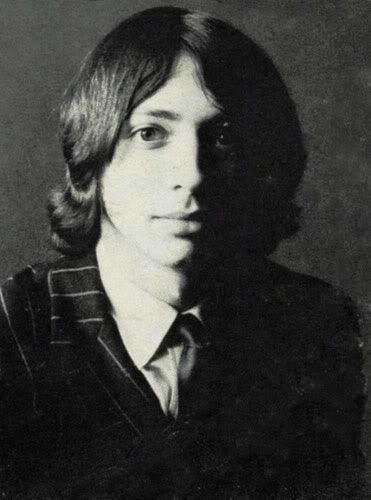
Michael Brown, 1949-2015
Your name and mine inside a heart upon a wall
Still finds a way to haunt me, though they’re so small
Michael Brown, 1949-2015
Your name and mine inside a heart upon a wall
Still finds a way to haunt me, though they’re so small
 A welcome return of McMurtry’s experience and imagination
It’s been seven years since singer-songwriter James McMurtry offered up an album of new material. His last release, 2009’s Live in Europe, recontextualized McMurtry’s societal observations in front of a European audience, and though the songs took on new shades in front of a foreign audience, the CD was still more of a tour memento than a new statement. Which leaves 2008’s Just Us Kids as his last full thesis. At the time, McMurtry’s observation fell upon broad social issues of political disorder, social isolation, economic disruption and ecological destruction. Seven years later, his concerns haven’t abated, but his songs narrow their focus to witness these larger issues at human scale.
The album’s opening track, “Copper Canteen,†finds its aging protagonists struggling to hang on to their small town life. The big box stores on the bypass loom over them, reframing broad questions about mass-scale marketing to personal issues of an individual town’s demise. Their fears find salve in nostalgic thoughts and the hope that they can hold on to retirement, as they remain fatalistic rather than desperate or bitter. Nostalgia threads through many of McMurtry’s new songs, with wanderers looking back to see where they lost the trail and community totems memorialized by those who remember. The portraits of hard-working fishermen, hard-luck ranchers and unemployed veterans are both inspiring and heartbreaking, and blend easily into songs of depression and escape.
Peeking through the darker scenes, there are a few glimmers of sunshine. The everyday details of “How’m I Gonna Find You Now†are rattled off in a monologue whose agitation reveals the narrator’s unspoken feelings, and the portraiture of “Things I’ve Come to Know†stems from the sort of intimacy that is born of time and devotion. On its surface, the album feels less overtly political than Just Us Kids, but the incisiveness of the lyrics turns these individuals’ stories into social commentary. McMurtry labels himself a writer of fiction, but the details he captures in songs like “Carlisle’s Haul†are too visceral to have been read in a book. He may fictionalize, but the people, places and language are as much experience as they are imagination.
Co-produced by CC Adcock (Lafayette Maquise, Lil’ Band O’ Gold) and engineer Mike Napoutiano, the guitar-bass-and-drums are augmented by well-placed touches of banjo and violin, and given added dimension from Hammond B3 (courtesy of Benmont Tench), moog bass (courtesy of Ivan Neville), Uilleann pipes, and various electric guitar sounds. The longer songs give the band a chance to play into the grooves, but the productions never lose sight of the vocals. McMurtry is a singer who tells stories, and a storyteller who sings melodies. At times he sounds like a more-melodic Lou Reed, with a half-spoken, half-sung style whose medium and message are inseparable. Seven years is a long time to wait for a new album, but in addition to McMurtry’s busy road schedule, songs this finely observed spring from experience rather than demand. [©2015 Hyperbolium] 
 Anne McCue swings
Anne McCue is better known for standing in front of guitars and drums than clarinets and brass. Her previous albums reached back to the gutsy sound of 1970s rock vocalists, as well as contemporaries like Sam Phillips and Lucinda Williams; her latest reaches back several more decades, to the sounds of the 1930s. There’s always been a bluesy edge to her singing, and here those notes consort with the roots of swing and gypsy jazz. McCue dials down the ferocity of her vocals to an era-appropriate slyness, picks terrific figures on her guitar, and perhaps most impressively of all, writes songs that bid to fill some blank pages in the great American songbook.
Drummer Dave Raven nails the era’s blood-pumping excitement with Krupa-styled tom-toms on the opening “Dig Two Graves,†Deanie Richardson’s fiddle provides a superb foil for McCue’s six string swing, and Jim Hoke’s clarinet and horn chart fills in the period detail. The song’s bouncy tempo camouflages lyrics of noirish revenge, with San Francisco fog cloaking fatalistic fortunes. McCue turns to folk-blues with the finger-picked renewal of “Spring Cleaning in the Wintertime†and the old-timey “Cowgirl Blues.†She turns into a charming, coquettish chanteuse for “Long Tall Story,†and gets slinky, ala Peggy Lee, on the double bass and finger-snapping “Save a Life.â€
Within the realm of swinging beats, McCue’s songs are quite diverse, ranging from the rockabilly “Little White Cat†to the fiery tango “Uncanny Moon.†There’s a nostalgic jazz core to the album, but it’s embroidered with elements of New Orleans funk, New York sophistication, big band rhythms, sinuous blues, stage flair and lyric craft. Dave Alvin guests as vocalist on the Cab Calloway-styled “Devil in the Middle,†and the album’s lone-cover, Regis McNichols Jr.’s contemporary “Knock on Wood,†fits perfectly with the standards vibe. McCue’s virtuosity is no surprise, but the ease with which she’s absorbed and restated the beating heart of swing music is impressive and thrilling. [©2015 Hyperbolium]
From the upcoming album Carousel One. Inspired by an anonymous family dog from a photo picked up in a second-hand shop.
 Circumstance, disappointment and nostalgia yield unexpected insights
Two years ago, Gurf Morlix’s Finds the Present Tense, found the singer-songwriter contending with noir-like inevitability and consequences. His protagonists were hung-up in the here-and-now, at intersections whose resolutions were one-way streets to the future. His new collection shifts the timeframe, looking back at a gritty childhood whose future was surprisingly open-ended. Unlike the fixed destinies of his fictional protagonists, Morlix’s own future was not set in stone by earlier events. The disappointments of “50 Years†yields surprises, and the smoke-filled air of “Born in Lackawana†didn’t obscure the choice between life in the steel mill and roads that led out of town. Morlix’s nostalgia is colored by the melancholy of time, and the distortions of his rear-view mirror leaves the temptations of “Dirty Old Buffalo” barely visible beneath the city’s newly polished exterior.
Morlix’s gruff tone and deliberate tempos are a piece with his songs of despondency, loneliness and exhaustion. But these emotional crucibles also produce resolve, such as that underpinning “Grab the Wheel,†and lifelines that remain visible in even the darkest of places. Redemption isn’t always at hand, however, and self-awareness isn’t necessarily a saving grace; some setbacks can only be moderated, and invitations, such as the bar in “Elephant’s Graveyard,†can turn out to be a trap. Morlix picks at the details of missed opportunities as if they’re a scab protecting healing flesh; but at the same time he’s searching for kernels of truth, such as found in a canine’s view of “A Dog’s Life,†or penetrating human insights, as essayed in the closing “Blue Smoke.†The search may be eatin’ at him, but it’s a fulfilling emotional and intellectual meal. [©2015 Hyperbolium]
 Gospel-soul gold from Sam Cooke’s SAR label
The goldmine that is the ABKCO vault continues to pour out its riches. Earlier releases from the Stones, Sam Cooke, Herman’s Hermits, and the Cameo-Parkway catalog, are now complemented by a pair of seminal compilations by the Soul Stirrers and Valentinos. The former launched Sam Cooke’s career, and he returned the favor by signing the group to his own SAR label. The latter, comprised of future solo-legend Bobby Womack and his four brothers, (Friendly Jr., Curtis, Harry and Cecil), wove their father Friendly Sr.’s deep faith into a soulful sound born of Cleveland’s meanest streets. They held onto the fire of their church grounding even as their material moved from gospel to secular, and the arrangements from harmony-laden worship to hard-charging soul.
The group’s transition from sacred to profane didn’t happen all at once, nor ever completely. The driving rhythm of their first single, “Somebody’s Wrong,†and the soulful croon of “Somewhere There’s a God,†were never really left behind. Their lyrics soon turned to a search for romantic love, but the vocal fervor continued to resound with a congregant’s search for heavenly connection. Having himself made the transition from gospel to R&B in the mid-50s, Sam Cooke well understood both the stigma and opportunities. But after failing to gain commercial traction with Bobby Womack’s original gospel “Couldn’t Hear Nobody Pray,†Cooke convinced the group to try R&B, commissioned his staff songwriters to rework the melodic hook of “Pray†into “Lookin’ for a Love,†rechristened the group as the Valentino’s, and scored their first and biggest hit single in 1962.
It wasn’t the last time that the Womacks and their songwriters would develop R&B material from gospel roots. The 1962 B-side, “Somewhere There’s a Girl†borrowed its melody and lyrical structure from 1961’s “Somewhere There’s a God,†and 1963’s “She’s So Good to Me†was based on the gospel standard, “God is Good to Me.†Curtis and Bobby Womack wrote the lion’s share of the group’s material, supplemented by songs from Sam Cooke, J.W. Alexander and a few others. “Lookin’ for a Love†was followed by the low-charting “I’ll Make it Alright†and the non-charting “Baby Lots of Luck,†putting the group’s commercial fortune in question. But two years after their breakthrough, Bobby Womack offered up a song that would top the charts. Just not by the Valentinos.
The Valentino’s country-tinged original “It’s All Over Now,†co-written by Womack and his sister in law, Shirley, was just starting to gain notice when the Rolling Stones rushed into the Chess studio in Chicago to wax their immortal cover. The Valentinos original still managed to climb to #21 R&B, but stalled out in the low 90s Pop as the Stones version rode to the chart’s upper reaches. Womack initially felt oppressed, like so many other African-American artists before him who’d been covered on pop radio, but his mood quickly turned. As he told Terry Gross in 1999, “Well, I didn’t like their version ’cause I didn’t think Mick Jagger – and to this day I say Mick Jagger can’t out-sing me. You know, but, when I saw that first royalty check, I liked their version.â€
A final single for SAR, “Everybody Wants to Fall in Love,†was released in 1964, and with Cooke’s death in December of that year, the label folded. Bobby Womack, who’d been playing in Cooke’s road band, moved on to session work and solo stardom, and a depleted Valentinos finished out the decade with Chess and Jubilee. Of the nineteen tracks included here, ten appeared on the 2001 anthology Sam Cooke’s SAR Records Story, but – incredibly – this is the first official reissue of the Valentinos’ full SAR catalog, including both sides of all seven singles, six previously unreleased masters (13, 15, 18, 19, 20, and 21), and a hidden bonus track of Sam Cooke giving direction in the studio. The 12-page booklet features session, chart and personnel data, photos, ephemera and extensive liner notes by Bill Dahl. This collection is decades overdue, but now that it’s here, you’ll find it was more than worth the wait. [©2015 Hyperbolium]
 1970s cult classic gets the deluxe reissue it’s always deserved
If you’ve worked at a college radio station with a deep library of vinyl, you might have been tipped to Ron Nagle’s 1970 album by a knowledgeable elder. Assuming it hadn’t been stolen, of course. Or maybe a songwriting credit (Barbra! The Tubes!) or the music he made on 1979’s Durocs prompted you to ask questions. Questions that led you on a journey through used record stores, flea markets and collectors’ forums. Perhaps an indie record store clerk even shelved a copy of Edsel’s 1986 vinyl reissue behind the counter for you. But more likely, and like the many fans of Nagle’s ceramics, you’ve never heard (or even heard of) this album. And that’s a wrong that’s finally being righted forty-five years after the fact.
Nagle’s one and only solo album was something of a lark, and was conceived at the intersection of his music and art careers. With his group the Mystery Trend having folded a few years earlier, he was focused full-time on ceramics. To help promote his first solo gallery show, he recorded the original “61 Clay,†and when the recording made its way to San Francisco’s KSAN-FM it caught the ear of the station’s major domo, Tom Donahue. Donahue got Nagle signed to Warner Brothers, and stayed on to co-produce the album with the legendary Jack Nitzsche. Recorded in both San Francisco and Los Angeles, the result drew heavily on Nagle’s Bay Area connections. In addition to his impressive vocals and keyboards, the album includes Beau Brummels Sal Valentino and Ron Elliott, Commander Cody’s steel player Steve Davis, Stoneground guitarists John Blakeley and Tim Barnes, and soon-to-be Pablo Cruise founder David Jenkins. Â
Beyond the San Francisco connections, Nagle drew upon the talents of guitarist Ry Cooder, and legendary drummers Mickey Waller and George Rains. But even with all that talent on board, Nagle remains very much the star of the show. Launching his songs from biographical seeds, he sings of a childhood crush, his parents hyperbolic storytelling, and his marriages – the first dissolving in an ex-wife’s identity crisis, the second providing him the support to turn back alcohol problems. He adds a twist to the neighborhood bodega of “Frank’s Store,†creating heartbreaking pathos with his vocal and Nitzsche’s string arrangement. Nitzsche’s production is spot-on throughout the album, ranging easily from ballads to guitar rockers to the steel-lined country rock of “Something’s Gotta Give Now.†This is the mix of sounds that made the transition from ‘60s jams to tighter ‘70s songwriting so riveting.
So what happened? Why isn’t this universally known as one of the era’s great rock albums? Reportedly, Nagle’s reluctance to tour and FM radio’s lack of support caused the album to disappear almost immediately. Looking at underground FM playlists from the era, it’s hard to imagine how this failed to gain major turntable time, particularly with Warner Brothers’ publicity machine and Tom Donahue’s connections. But disappear it did, and despite two more attempts at stirring some commercial interest (the post-album tracks “Berberlang†and “Francineâ€), Nagle’s music career moved out of the spotlight. He’d return with Scott Matthews in the Durocs and Profits, write with Barbra Streisand (“Don’t Believe What You Readâ€) and the Tubes (“Don’t Touch Me Thereâ€), produce, and create sound affects for film, but as a solo musical act, he never returned.
Omnivore’s reissue augments the album’s original eleven tracks with material mined from Nagle’s vault, including two alternate mixes, a pair of period radios spots and a full disc of demos. The latter includes both material that was later re-recorded and Nagle originals that have otherwise gone unheard until now. Among the former is the original version of “61 Clay†and an early take on “Saving it All Up For Larry†that differs markedly from the Durocs version. Of the fourteen demos, only “From the Collection of Dorothy Tate†and “61 Clay†have been previously issues – the remaining dozen are heard here for the first time. As with the album tracks, Nagle drew heavily on his personal life, mining his relationships and emotions, and sharing his perspectives on the people he knew.
The production quality of the demos is surprisingly thoughtful and full, sounding more like outtakes than writer’s samples. Omnivore’s deluxe reissue spans two full discs housed in a tri-fold digipack with a twenty-page booklet. Gene Scalutti’s liner notes include fresh interviews with Nagle, and provides details on each of the demos. The booklet also features lyrics to the original album’s eleven songs. Bad Rice has appeared on most-wanted-CD lists for decades, and it’s hard to imagine a more fitting renewal than this lovingly crafted set. Though it’s only February, this may be the set to beat for reissue of the year. [©2015 Hyperbolium]
 Paul Kelly’s extraordinary soul revue
Australian singer-songwriter Paul Kelly’s turned his solo-act-with-band into an old school soul revue. Touring with multiple vocalists in his band, Kelly found his songs gaining a new life. Recorded a-song-a-day over two weeks, the tracks feature punchy arrangements and the soul stirring voices of Clairy Browne, Vika and Linda Bull, Dan Sultan and Kira Puru. Each takes their turn in the spotlight to deliver unrelenting, knock-out performances, building on Kelly’s new material and burning down the house with Vika Bull’s cover of the catalog chestnut “Sweet Guy.†Kelly sings a few tracks (“Righteous Woman,†“Thank You†and “Hasn’t It Rainedâ€), but it’s his generosity as a songwriter and his ears as a producer that make this album so exceptional. Originally released as a set of four 7†singles, the original eight tracks are augmented with three bonuses for this digital release, including the superb gospel closer “Hasn’t It Rained.†Kelly’s currently touring Australia with the Merri Soul Sessions; here’s hoping the group’s tour bus has pontoons that will get it off the continent. [©2015 Hyperbolium]
 Soulful rock with the fire and brimstone of the ’70s
Gallagher’s press pitches his band as psych-tinged Americana, but this album’s rock hearkens back more to the ‘70s than the ‘60s, and the roots more to soul than country. Gallagher sings in a high, keening voice that reaches with extra conviction in the most emotional moments, drawing the listener’s ear to regret and sorrow of his laments. The guitar, bass, drums and piano suggest the hearty guitar rock music you would have heard on a mid-70s bill at San Francisco’s Winterland. There’s an echo of the Black Crowes, Lee Michaels and others, but with more boogie and less blues.
Psychedelic touches are found in Jacob Landry’s guitar playing and Gallagher’s impressionistic lyrics. The latter occasionally come into sharp focus with memorable lines such as “… faith and fame / one will keep you honest / the other is just a game.†Even in his most poetic moments, Gallagher sings with the fervor of a preacher, exhorting the listener to break through self-imposed limitations and to create one’s own rock ‘n’ roll gospel. Gallagher’s high voice and enthusiastic delivery might suggest Blind Melon’s Shannon Hoon or even Slade’s Noddy Holder, but backed by a band on a mission, the effect is more like Rod Stewart on Jeff Beck’s Truth, or Jeff Bebe in the fictional Stillwater.
Gallagher adds harmonica to the fire-and-brimstone “Shallow Grave†as the rhythm session bashes it out alongside Kirby Hammel’s organ and piano, and the combination of vocal harmonies and hard-edged guitar soloing in “Feel Like Going Home†brings to mind CSN&Y’s Déjà Vu. Landry gets ample time to solo without the songs wandering into jam-band territory, and really lets loose for the closing “1935.†Written and rehearsed in only a few weeks, the album is surprisingly cohesive, doubly so when you realize the band’s only been together a year. Chemistry is key, and Lee Gallagher and the Hallelujah have started out with a winning formula. [©2015 Hyperbolium]